Showing posts with label Obama. Show all posts

Muslim vote gains significance as race for White House tightens

WASHINGTON: Muslim voters may play a larger than size role in the US elections next week as the race for the White House shapes into a close competition between Hillary Clinton and Donald Trump.
The competition, which clearly favoured Clinton until this week, tightened after investigators revisited her email issue and media reports claimed that they discovered thousands of new emails that were not reported before.
A summary of the opinion surveys released on Sunday showed that the revived email scandal narrowed Hillary Clinton’s double-digit lead to single digits. The RCP poll average gave Clinton 47.6 per cent chances of winning the election against Trump’s 43.3. This narrowed Clinton’s lead to 4.3pc, compared to a more than 10-point lead she had last week. Both candidates, however, still have negative favourability ratings: minus 7.4 for Clinton and minus 21.2 for Trump.
This makes the race so tight that every vote counts, even those of Muslims.
There were 3.3 million Muslims in the United States in 2015, which is about 1 per cent of the country’s population, according to the Washington-based Pew Research Centre. Compare this with 17pc Latinos and 13pc blacks and it shows why in previous elections nobody talked about winning over or losing Muslim votes.
And it also shows why both Democrats and Republicans are reaching out to Muslim voters this year, particularly in the urban areas of key swing states where Muslims do have a noticeable presence.
Their near-total rejection of Donald Trump discourages Republicans from contacting Muslims but as the race tightened, they started contacting Muslim media outlets, including Dawn, with messages emphasising Trump’s business contacts with the Muslim world.
Democrats are more active and vocal too. Last week, they released a video featuring Khizr Khan, the father of a slain US soldier, and it had an “incredibly powerful message,” as The Washington Post noted.
Mr Khan talks about how Mr Trump’s anti-Muslim rhetoric hurts all, even those who sacrificed their loved ones for the country. Mr Trump attacked Mr Khan as a Democratic trickster, playing on grief to help elect Hillary Clinton.
The Clinton campaign is playing the ad in swing states, including Florida, Iowa, Nevada, New Hampshire, North Carolina, Ohio and Pennsylvania, where Muslim votes can make a difference. And such messages are having an impact.
The Council on American-Islamic Relations (CAIR), an umbrella organisation with offices across the country, released a survey report this week, showing that 72pc of those surveyed intend to vote for Mrs Clinton, while just four per cent pledged to vote for Mr Trump.
Three in five Muslims also said they believe the Democratic Party was friendly toward them while 37pc said it was neutral. By contrast, less than one in 10 felt the same way about the Republican Party, though 31pc said the party was neutral.
The CAIR report also claimed that Muslims were fired up this election cycle as 86pc of registered Muslim voters plan to cast ballots.
US media surveys of predominantly Muslim neighbourhoods also confirm this finding as most outlets reported overwhelmingly pro-Democratic sentiments among the residents.
The CAIR report acknowledges that Muslims are only one per cent of the total US population but said that when they are clubbed with South Asians, Middle Easterners and other non-Latino immigrants, “they form a Democrat-leaning mass.”
US media reports warn that in some places, even a few thousand votes can swing the results either way.
Winning these votes is also important because US presidents are not chosen by popular vote, but through an Electoral College system that elevates the importance of several competitive states, such as Florida, Ohio, Michigan, Pennsylvania and Virginia. The Electoral College consists of 538 electors, distributed among states according to their representation in Congress.
A majority of 270 electoral votes is required to elect the president and that’s why it is also important to win states, not just an overall majority.
Muslim voters are concentrated in areas, which can swing a state either way. In Florida, Hillary Clinton leads polls by less than three per cent; in Ohio, her lead is narrower than two points.
But Sajid Tarar, a Pakistani-American businessman, rejects the suggestion that most Muslims would vote for Hillary Clinton.
“Muslims are a religious community and Mr Trump backs for issues that are closer to Islam,” says the Trump supporter who also addressed the Republican convention earlier this year. “Democrats spouse same-sex marriage, legalising cannabis and socialism, values that negate Islam.”
But the CAIR survey shows that 85pc Muslims blame Mr Trump for fanning Islamophobia and this is enough for them to vote for his rival.

US official warns over 9/11 law during Saudi visit

RIYADH: A United States law allowing victims of the Sept 11, 2001 attacks to sue Saudi Arabia could have “serious implications” for shared US-Gulf interests, a top Obama administration official said on Thursday.
US Treasury Secretary Jacob Lew made the comments at the opening of a meeting with finance ministers from the six-nation Gulf Cooperation Council, whose most powerful member is Saudi Arabia.
The US Congress voted overwhelmingly in September to override President Barack Obama’s veto of the Justice Against Sponsors of Terrorism Act (JASTA).
Fifteen of the 19 Al Qaeda hijackers who carried out the 9/11 attacks that killed nearly 3,000 people were Saudi, but Riyadh denies any ties to the plotters.
JASTA allows attack survivors and relatives of terrorism victims to pursue cases against foreign governments in US federal court and to demand compensation if those governments are proven to bear some responsibility for attacks on US soil.
Lew said JASTA “would enact broad changes in long-standing international law regarding sovereign immunity that, if applied globally, could have serious implications for our shared interests.”
He said the Obama administration has proven its determination to hold people responsible when they commit “horrendous acts”, but “there are ways to do that without undermining important international legal principles.” In opposing the law, Obama said it would harm US interests by opening up the US to private lawsuits over its military missions abroad.
Saudi Arabia and its Gulf allies have also expressed concern about erosion of sovereign immunity, a principle sacrosanct in international relations. But the potential implications go far beyond the Gulf.
Some British, French and Dutch lawmakers have threatened retaliatory legislation to allow their courts to pursue US officials, threatening a global legal domino effect.

US seeks clarity on Duterte 'separation' comments

The US has said it will seek clarity on the Philippine president's announcement of a "separation from the US".
Rodrigo Duterte made the comments in China on Thursday at an economic forum, saying the separation applied to military and economic co-operation.
US officials said the remarks were "at odds" with the "close relationship" shared by the countries.
Mr Duterte has grown increasingly hostile towards the US - a traditional ally - since taking office in June.
His presidential spokesman said the latest comments were a "restatement" of "independent foreign policy".
"This is not an intent to renege on our treaties, but an assertion that we are an independent and sovereign nation," Ernesto Abella said on Friday.
He explained Mr Duturte wanted to "separate the nation from dependence on the US and the West and rebalance economic and military relations with Asian neighbours".
Several members of Mr Duterte's cabinet members have also said their country would not sever ties with Washington.
Speaking at a business forum in Beijing on Thursday, Mr Duterte said: "I announce my separation from the United States. Both in military, not maybe social, but economics also. America has lost."
"I've realigned myself in your ideological flow and maybe I will also go to Russia to talk to [President Vladimir] Putin and tell him that there are three of us against the world - China, Philippines, and Russia. It's the only way," Mr Duterte said.

Trump takes aim at First Lady Michelle Obama

Republican presidential candidate Donald Trump has launched a rare attack on Michelle Obama, saying "all she wants to do is campaign" for his rival.
Speaking at a North Carolina rally, Mr Trump called the country's leadership "babies" and "losers".
He also accused the first lady of attacking Hillary Clinton in 2007 by invoking a line she said about being fit to run the White House.
The Obama campaign had denied the line referred to Mrs Clinton.
"And I see how much [Michelle Obama] likes Hillary," Mr Trump told a rally in North Carolina.
"But wasn't she the one that originally started the statement, 'If you can't take care of your home,' right? 'You can't take care of the White House or the country?' Where's that? I don't hear that. I don't hear that."
The New York businessman was referring to a remark Mrs Obama made in 2007 while campaigning for her husband, who was running against Mrs Clinton.
The first lady said: "If you can't run your own house, you certainly can't run the White House".
Some critics questioned whether the comment was an undercut aimed at Mrs Clinton's relationship with her husband, former President Bill Clinton.
But the Obama campaign maintained the line was not directed at the Clintons and instead referred to their own struggle with parenting during a campaign.

In last debate, Trump suggests he may reject election result

Republican candidate Donald Trump on Wednesday suggested he might reject the outcome of the Nov 8 US presidential election if he loses, a possibility his Democratic rival Hillary Clinton called “horrifying”.
In their third and final presidential debate, Trump said he would wait to decide whether the outcome was legitimate.
“I will tell you at the time, I will keep you in suspense,” Trump said. Clinton said she was “appalled” by Trump's stance.
“Let's be clear about what he is saying and what that means: He is denigrating, he is talking down our democracy and I for one am appalled that someone who is the nominee for one of our two major parties would take that position,” she said.
She said Trump, a former reality TV star, had in the past also complained that his show was unjustly denied a US television Emmy award.
“I should have gotten it,” Trump retorted.
In a fiery debate that centered more on policy than the earlier showdowns, Trump accused Clinton's campaign of orchestrating a series of accusations by women who said the businessman made unwanted sexual advances against them.
Donald Trump and Hillary Clinton finish their third and final 2016 presidential campaign debate at UNLV in Las Vegas, Nevada.— Reuters
Trump said all of the stories were “totally false” and suggested Clinton was behind the charges. He called her campaign “sleazy”.
“I think they either want fame or her campaign did it, and I think it's her campaign,” Trump said.
Clinton said the women came forward after Trump said in the last debate he had never made unwanted advances on women. In a 2005 video, Trump was recorded bragging about groping women against their will.
“Donald thinks belittling women makes him bigger. He goes after their dignity, their self-worth and I don't think there is a woman anywhere who doesn't know what that feels like,” Clinton said. She cited other minorities she said Trump had maligned.
“This is a pattern. A pattern of divisiveness, of a very dark and in many ways dangerous vision of our country where he incites violence, where he applauds people who are pushing and pulling and punching at his rallies. That is not who America is,” she said.
Trump seeks to reverse his fading momentum in an election that opinion polls show is tilting away from him. The New York businessman has raised concerns by claiming the election will be rigged against him. He has urged supporters to patrol polling places in inner cities to prevent voter fraud.
The two presidential rivals had tough but issues-based exchanges on abortion, gun rights and immigration during the 90-minute showdown.

Putin's puppet?

Trump, 70, and Clinton, 68, battled sharply over the influence of Vladimir Putin on Wednesday, with Clinton calling Trump the Russian president's puppet and Trump charging Putin had repeatedly outsmarted Clinton.
Trump is cheered by his wife Melania Trump (C) and daughter Ivanka Trump (L) at the end of the final presidential debate.— AFP
Clinton said Trump had refused to condemn Putin and Russia for recent cyber attacks.
“He'd rather believe Vladimir Putin than the military and civilian intelligence officials that are sworn to protect us,” Clinton said.
US intelligence agencies and the Department of Homeland Security have said the Russian leadership was responsible for recent cyber attacks on the Democratic National Committee and the leaking of stolen emails.
Trump rejected the idea that he was close with Putin, but suggested he would have a better relationship with Russia's leader than Clinton.
“He said nice things about me,” Trump said. “He has no respect for her, he has no respect for our president and I'll tell you what, we're in very serious trouble.”
Clinton responded: “Well that's because he'd rather have a puppet as president of the United States.”
“No, you're the puppet,” Trump retorted. “Putin has outsmarted her and Obama every single step of the way,” he said in a reference to US President Barack Obama, a Democrat like Clinton.
Clinton also said Trump had been “cavalier” about nuclear weapons and should not be trusted with the nuclear codes.

Supreme Court

Clinton promised to appoint justices to the Supreme Court who would uphold a woman's right to abortion laid out in the court's 1973 Roe vs Wade decision, while Trump promised to appoint what he called “pro-life” justices who would overturn the decision.
Under existing law, Trump said, “You can take the baby and rip the baby out of the womb of the mother just prior to the birth of the baby.”
“Honestly, nobody has business doing what I just said, doing that as late as one or two or three or four days prior to birth,” Trump said.
Clinton said Trump's “scare rhetoric is just terribly unfortunate”. “This is one of the worst possible choices that any woman and her family has to make and I do not believe the government should be making it,” Clinton said.
Trump said he would appoint a Supreme Court justice who would protect American gun rights. He has said in the past that Clinton wants to “essentially abolish” the Second Amendment of the US Constitution guaranteeing a right to bear arms.
Clinton said she supports gun rights, but wants additional regulations on guns, citing examples of children being hurt or killed in gun accidents. “I see no conflict between saving people's lives and defending the Second Amendment.”

No handshake

Clinton and Trump walked straight to their podiums when they were introduced at the University of Nevada, Las Vegas, once again forgoing the traditional handshake as they did at the second debate last week in St. Louis, Missouri.
The debate gave Trump, making his first run for elected office, perhaps his best remaining chance to sway the dwindling number of Americans who are still undecided about their vote.
Clinton, a former secretary of state, US senator and first lady, leads in national polls and in most of the battleground states where the election will likely be decided. The debate was her opportunity to make a closing argument on why she is best suited to succeed Obama.
Clinton has struggled to get past concerns about transparency raised over her use of a private email server for work communication while she was secretary of state from 2009 to 2013.

Exchange of accusations

The two candidates clashed over accusations that Clinton as US secretary of state from 2009 to 2013 did favours for high-dollar donors to her family's Clinton Foundation. Asked about a potential conflict of interest, she said she acted “in furtherance of our country's values and interests”.
She and Trump talked over each other, Clinton defending her ties to the foundation, saying “there is no evidence” of a conflict, while Trump said the foundation should return millions of dollars to countries like Saudi Arabia and Qatar who treat gay people harshly.
“It's a criminal enterprise,” Trump said.
Clinton said she would be happy to compare the Clinton Foundation to Trump's charitable Trump Foundation, which among its activities was to buy “a six-foot statue of Donald”.

Trump offers to help reduce India-Pakistan tensions

Trump offers to help reduce India-Pakistan tensionsWASHINGTON: Republican presidential candidate Donald Trump has said that if elected, he’d like to mediate between India and Pakistan because the region was a “very, very hot tinderbox”.
But like the Obama administration, Mr Trump also said that he would only mediate if both countries asked him to do so.
In a meeting with the Indian community in New Jersey this weekend, the Republican candidate promised that if voted to power, he would make the United States and India “the best of friends” and they would have a “phenomenal future” together.
“There isn’t going to be any relationship more important to us,” he added.
Later, in an interview to The Hindustan Times, Mr Trump expressed his desire to play a role in reducing India-Pakistan tensions.
“Well, I would love to see Pakistan and India get along, because that’s a very, very hot tinderbox,” he said. “That would be a very great thing. I hope they can do it.”
Mr Trump also referred to “the recent problem” in held Kashmir where Indian forces have killed more than 100 demonstrators since July and a terrorist attack in Uri brought the two countries close to yet another armed conflict.
Asked if he would like to play a role, he said, “If it was necessary I would do that. If we could get India and Pakistan getting along, I would be honoured to do that.”
He said that reducing tensions between South Asia’s two nuclear-armed nations would “be a tremendous achievement” and “if they wanted me to, I would love to be the mediator or arbitrator”.

Women come forward with claims that Donald Trump touched them inappropriately

Women come forward with claims that Donald Trump touched them inappropriatelyWASHINGTON: Two women told The New York Times that Donald Trump touched them inappropriately groping a woman in one instance and kissing a woman in another during separate encounters that took place as long as three decades ago, the newspaper reported Wednesday.
Trump told the Times there was no truth to either of the claims.
In a statement, Trump's campaign spokesman, Jason Miller, said “the entire article is fiction” and accused the newspaper of launching “a completely false, coordinated character assassination.”
Another newspaper, The Palm Beach Post in Florida, reported Wednesday night that a woman said Trump groped her at his Mar-a-Lago estate 13 years ago. Trump's campaign said her allegation “lacks any merit or veracity.”
And late Wednesday, a writer for People magazine reported a 2005 incident in which she said Trump kissed her against her will at Mar-a-Lago.
The Trump campaign said, “There is no merit or veracity to this fabricated story.”
The women's stories come less than a week after the publication of a 2005 recording in which the Republican nominee boasted of groping women. Trump apologised for his comments, but also dismissed them as “locker room talk” and a distraction from the campaign.
Both women who spoke to the Times said they were coming forward with their stories because of the recording and Trump's response to questions about it at Sunday's presidential debate.
The New York businessman said then he had never done the things he bragged about on the recording.
Jessica Leeds, 74, of New York, said she sat beside Trump in the first-class cabin of a flight to New York more than three decades ago.
After less than an hour in the air, he lifted the armrest separating them and began to touch her, she said, and grabbed her breasts and tried to put his hand up her skirt.
“It was an assault,” Leeds told the newspaper. She said she fled to the back of the plane and sat in the coach section.
A second woman, Rachel Crooks of Ohio, told the newspaper she met Trump as a 22-year-old in 2005 the same year he was recorded bragging in vulgar terms about grabbing women's genitals.
Crooks said she was a receptionist for a real estate investment and development company located at Trump Tower and met Trump outside an elevator in the building one morning. She introduced herself to the celebrity businessman, she said.
They shook hands but Trump would not let go, Crooks said, and he began kissing her cheeks and then kissed her on the mouth. “It was so inappropriate,” she told the newspaper.
“I was so upset that he thought I was so insignificant that he could do that.”
Crooks said she recounted the incident that day to her sister by phone and to her boyfriend that night, both of whom spoke to the Times. In the case of Leeds, the Times reported it had interviewed four people who said she had told them more recently of her encounter with Trump.
Leeds said she did not complain to the airline at the time because such unwanted advances were common for businesswomen in the 1970s and early 1980s, the newspaper reported.
She said she encountered Trump at a charity event a few years later and said he had seemed to remember her and insulted her with a crude remark.
Both women told the paper they support Hillary Clinton's campaign for president.
In a statement, Miller rejected the women's accounts as “fiction.”
“It is absurd to think that one of the most recognisable business leaders on the planet with a strong record of empowering women in his companies would do the things alleged in this story, and for this to only become public decades later in the final month of a campaign for president should say it all,” Miller said.
The Palm Beach Post reported that Mindy McGillivray, 36, of Palm Springs, Florida, did not report to authorities her 2003 encounter with Trump at the time but had shared the story with close friends and family.
A man who had accompanied her to Mar-a-Lago that day, Ken Davidoff, told the newspaper he vividly remembers McGillivray telling him Trump had groped her.
Davidoff said he had brought McGillivray with him when he joined his father to shoot pictures during a concert by singer Ray Charles on Jan 24, 2003. After the show, as people were saying goodbye to Charles, McGillivray felt “a pretty good nudge, more of a grab” close to the centre of her bottom, she told the newspaper.
“I turn around and there's Donald. He sort of looked away quickly. I quickly turned back, facing Ray Charles, and I'm stunned,” she said.
McGillivray said she considered making a scene at the time but decided “to stay quiet.”
Trump's remarks at the second debate in which he denied groping women changed her mind, she said. On People magazine's website Wednesday, reporter Natasha Stoynoff wrote of a 2005 incident she said happened when she travelled to Mar-a-Lago to write a feature about Donald and Melania Trump's first wedding anniversary.
Stoynoff wrote that while Donald Trump was giving her a tour of the mansion, he wanted to show her one room he described as “tremendous.”
“We walked into that room alone, and Trump shut the door behind us,” Stoynoff wrote.
“I turned around, and within seconds, he was pushing me against the wall, and forcing his tongue down my throat.”
In response to the Times report, a Clinton adviser accused Trump of lying when he said he had not groped or kissed women without their consent.
The Times story “sadly fits everything we know about the way Donald Trump has treated women” and shows that the “disgusting behaviour” he brags about in the 2005 video “is more than just words,” communications director Jennifer Palmieri said in a statement.

Russia announces first Syria talks since US freeze

Russia announces first Syria talks since US freezeMOSCOW: Russia on Wednesday announced the first international talks on the Syria conflict since Washington pulled out of bilateral ceasefire negotiations in protest at Moscow's bombing of Aleppo.
Russian Foreign Ministry indicated the possibility of talks, saying Russian Foreign Minister Sergei Lavrov and United States (US) Secretary of State John Kerry agreed to sit down with top diplomats from “key countries in the region” on Saturday in Lausanne.
The meeting which Lavrov said "could include Turkey, Saudi Arabia and possibly Qatar" comes after Syria plunged into some of the worst violence it has seen as government forces backed up by Russian air-power push a brutal assault to take rebel-held eastern Aleppo.
Despite the collapse in relations Lavrov told CNN in an interview on Wednesday that he hoped the weekend talks in Switzerland could help “launch a serious dialogue” based on the now-defunct US-Russian pact.
“We would like to have a meeting in this narrow format, to have a businesslike discussion, not another General Assembly-like debate,” Lavrov said.
The United Nations said that Syria envoy Staffan de Mistura had been invited to take part in the talks but hopes were low of a breakthrough to end the five-year conflict that has claimed some 300,000 lives.
Pope Francis also appealed on Wednesday for an immediate ceasefire in Syria, calling for “at least” a truce enabling civilians, especially children, to be evacuated, after Aleppo came under fierce air assault.
“It is with a sense of urgency that I renew my appeal, begging those responsible, with all my strength, for an immediate ceasefire to be imposed and respected,” Pope told his weekly audience in Saint Peter's Square at the Vatican.
The West has accused Moscow of potential war crimes over its bombing campaign, as acrimony surged after the US on October 3 pulled the plug on bilateral talks with Moscow after a truce deal unravelled.
The fallout from the collapse in diplomacy on Syria has seen some in the West call for punitive measures against Moscow, while Russia has responded by bolstering its forces in the war-torn country.
President Vladimir Putin has warned warned Western countries against imposing sanctions on Moscow over Syria, stressing that Russia would not let itself be isolated.
“We should not go down the path of pressure and blackmail but search for compromise,” Putin said on Wednesday at an investment forum in Moscow.
“I have said one hundred times that we are ready to search for these compromises. We would very much like that our partners treat us this way,” he added.
Putin earlier this week cancelled a long-planned visit to France over Syria, and on Wednesday slammed Paris for tabling a UN proposal on Aleppo at the weekend that Russia vetoed.
“They put forward the resolution knowing that it would not pass, in order to incite a veto,” Putin said.
“Why? It was aimed at inflaming the situation and fanning hysteria around Russia,” he added.
French Foreign Minister Jean-Marc Ayrault said that Putin had cancelled his visit because he was “embarrassed” about Russia's bombing of Aleppo.
The United Nations has warned of the unfolding humanitarian catastrophe taking place in besieged eastern Aleppo, saying that the rebel-held territory could be destroyed entirely by the end of the year.
Fresh air strikes and artillery fire in Aleppo on Wednesday left at least seven people dead, an international monitor said, a day after Russia was accused of stepping up its raids on the city.

US military strikes Yemen after missile attacks on Navy ship

US military strikes Yemen after missile attacks on Navy shipWASHINGTON: The United States military launched cruise missile strikes on three coastal radar sites in Houthi-controlled areas of Yemen, retaliating after failed missile attacks this week on a US Navy destroyer, officials said on Wednesday.
The strikes authorised by President Barack Obama represent Washington's first direct military action against Houthi-controlled targets in Yemen's conflict.
The Pentagon said initial US assessments indicated the radar sites were destroyed.
“These limited self-defense strikes were conducted to protect our personnel, our ships, and our freedom of navigation in this important maritime passageway,” Pentagon spokesman Peter Cook said.
“The United States will respond to any further threat to our ships and commercial traffic, as appropriate.”

US-India relations reason for Pakistan's burgeoning ties with Russia

WASHINGTON: Prime Minister's Special Envoy on Jammu and Kashmir Mushahid Hussain Syed, on a visit to the United States, said US-India relations are the reason for Pakistan's burgeoning ties with Russia.
In a program organised by the think tank Atlantic Council, Hussain said, "We [Pakistan] are observing a change in US diplomatic policy".
Hussain said every action has a reaction, and Pakistan felt the need to develop close ties with Russia after President Obama’s two visits to India.
“This was the start of a new chapter in Pakistan-Russia ties.”
The senator added that Russia is in favour of building a working relationship with countries of the region and it has also started a dialogue process with Afghan Taliban through back-door cha
nnels.
He said the US State Department had refused to give visa to then Gujrat Chief Minister Narinder Modi in 2006, but when Modi was elected as Indian Prime Minister, US changed its policy for political gains.
"This U-turn of US policy can be traced back to the time of Bush administration, when the US-India nuclear deal was signed which was against the law of non-proliferation of nuclear weapons," said Hussain.
"Stability of Afghanistan and eradication of terrorism is a top priority of the US, which needs Pakistan to play a role in the peace-process. Pakistan is not only providing its assistance in the peace process but also facing damages," stated the senator while addressing the audience.

Violating Indus Waters Treaty will be an act of war

The senator stated India can not violate the Indus Waters Treaty, as that will constitute as an act of war.
"Apart from Pakistan and India, the World Bank is also a stakeholder in the treaty," said Hussain.
Commenting on the Uri attack in India-held Kashmir, Husain said, "UN military observer group for India and Pakistan should investigate the Uri attack. Crossing the Line of Control to attack any target in India is not possible for any militant."
He added that if India has any evidence or intelligence regarding the attack, it should be shared with Pakistan.
A contingent of Russian ground forces arrived in Pakistan earlier in September for the first ever joint Pak-Russian military exercise.
The two-week-long exercise is expected to continue until Oct 10. The exercises with Russian ground forces come at a time when tensions between Pakistan and India are running high following an attack on the Uri military camp in India-held Kashmir.
Around 200 military personnel of both countries will participate in the drills.

Hurricane Matthew: Hundreds dead in Haiti storm disaster

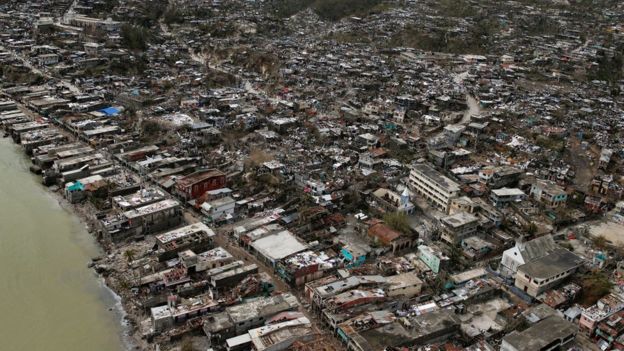
Destroyed houses are seen after Hurricane Matthew hit JeremieThe death toll in Haiti as a result of Hurricane Matthew has soared to 283, the government says.
Some 50 people were reported to have died in the southern town of Roche-a-Bateau alone.
The peninsula's main city, Jeremie, saw 80% of its buildings levelled. In Sud province 30,000 homes were destroyed.
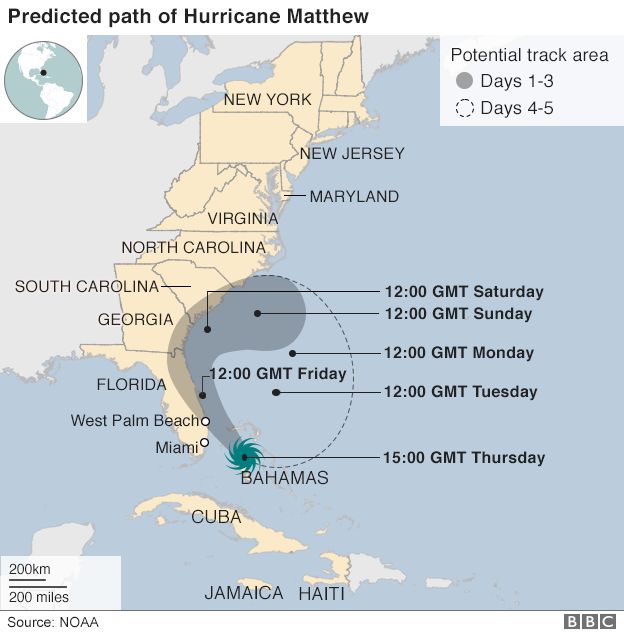
The hurricane has again been upgraded to a Category Four storm, the second highest hurricane classification, as it heads for the US state of Florida.
The new death toll was given by Haitian government officials. On Thursday, a toll of just over 100 was being given.
Hurricane Matthew - the most powerful Caribbean storm in nearly a decade - has pounded the Bahamas after slicing through Haiti and Cuba.
Trees and power lines were reportedly down in the Bahamas but no fatalities were reported.
Most of the fatalities in Haiti were in towns and fishing villages around the southern coast, with many killed by falling trees, flying debris and swollen rivers.
The storm passed directly through the Tiburon peninsula, driving the sea inland and flattening homes with winds of up to 230km/h (145mph) and torrential rain on Monday and Tuesday.
The collapse of an important bridge on Tuesday had left the south-west largely cut off.
Non-governmental organisations said phone coverage and electricity were down and people were running out of food and water.
The BBC's Tony Brown in south-western Haiti said he had seen people trying to cope with the mass destruction on their own, trying to rebuild from the rubble but without the help of the army or police.
Map shows Hurricane Matthew's path from the Bahamas heading towards Florida and other US eastern statesAcross the country, there were some 350,000 in need of assistance, according to the UN Office for the Coordination of Humanitarian Affairs.
A spokesperson for the American Red Cross, Suzy DeFrancis, said the first priority was to get phone networks across the country back up and running.
"We will bring in technology to help do that," she said.
"We also have warehouses with relief supplies that we will be distributing. Some of the needs that families may have are kitchen kits so they can cook meals, any kind of hygiene kits and then we are most worried about cholera, so we will be helping to distribute aqua tabs to purify the water."
The country is one of the world's poorest, with many residents living in flimsy housing in flood-prone areas.
Four people also died in the storm in the neighbouring Dominican Republic on Tuesday.

Top UN court rejects Marshalls nuclear case against Pakistan, India

THE HAGUE: The United Nation's (UN) highest court Wednesday threw out a bid by tiny Marshall Islands to sue Pakistan for “failing to halt the nuclear arms race”, moments after rejecting a similar case against India.
“The court upholds the objection to jurisdiction raised by Pakistan based on the absence of a dispute between the two parties,” judge Ronny Abraham told the International Court of Justice in The Hague, and “cannot proceed to the merits of the case".
The 16-judge bench at the ICJ however was also to rule later in the day in a separate decision on whether the Pacific island nation's David-versus-Goliath battle could continue against Britain.
The archipelago is seeking to shine a fresh spotlight on the global threat of nuclear weapons.
But in a majority verdict by nine votes to seven “the court upholds the objection to jurisdiction raised by India”, presiding judge Ronny Abraham said, and therefore the tribunal “cannot proceed to the merits of the case.”
The tribunal, set up to resolve rows between nations, found it lacked the jurisdiction in the case as there had been no prior recorded dispute or negotiations over the nuclear issue between the Marshall Islands and India.
The tiny Pacific island nation was ground zero for a string of nuclear tests on its pristine atolls between 1946-58, carried out by the United States as the Cold War arms race gathered momentum.
Initially in 2014, Majuro accused nine countries of failing to comply with the 1968 nuclear Non-Proliferation Treaty, which seeks to inhibit the spread of atomic bombs.
But the ICJ already failed to take up cases against the other countries ─ China, France, Israel, North Korea, Russia and the United States ─ as they have not recognised the court's jurisdiction. Israel has also never formally admitted to having nuclear weapons.
The Marshall Islands has maintained that by not stopping the nuclear arms race Britain, India and Pakistan continued to breach their obligations under the treaty — even if New Delhi and Islamabad have not signed the pact.
The treaty commits all nuclear weapon states “to pursue negotiations in good faith on effective measures relating to cessation of the nuclear arms race at an early date and to nuclear disarmament”.
Majuro is calling for nuclear powers to take “all necessary measures” to carry out what it considers to be their obligations under the treaty.

'Islands vaporised'

At a March hearing, Majuro's lawyers painted a vivid picture of the horrors seen after 67 nuclear tests were carried out on Bikini and Enewetak atolls.
“Several islands in my country were vaporised and others are estimated to remain uninhabitable for thousands of years,” Tony deBrum, a former Marshall Islands foreign minister, told the court.
The so-called “Operation Castle” tests in March and April 1954 were particularly devastating and resulted in massive contamination because of the nuclear fall-out.
“The entire sky turned blood-red,” said deBrum, who witnessed the explosion of the largest-ever US-built nuclear device called “Castle Bravo” as a nine-year-old boy.
Critics have argued however that the ICJ action is a distraction and that the islanders' real fight is with Washington, which carried out the tests in their backyard.
They contend that the case has no relation to the victims' claims for increased compensation, better health care and clean-ups to render the sites habitable again.
Experts however say the islands hoped the three cases before the ICJ will thrust nuclear disarmament talks, which have stalled over the past two decades, back into the spotlight.
Even if the case has no direct impact, the Marshall Islands' residents “perhaps feel that the more the difficulties with nuclear weapons are brought to the public consciousness, the better,” said Jens Iverson, assistant professor of Public International Law at Leiden University.
“They may hope that the world may become a safer place,” Iverson told AFP.

Islamic State chief Abu Bakr al-Baghdadi poisoned at feast

PHOTO: AFPIslamic State chief Abu Bakr al-Baghdadi and three of his top aides have fallen ill after being poisoned at a feast, Iraqi news agency WAAreports.
They have been shifted to an undisclosed location under strict measures, reports say. The lunch prepared for Baghdadi and three other Islamic State leaders was allegedly poisoned in Iraq’s Be’aaj district, it has been reported.
Earlier this year, the Pentagon warned Baghdadi that he would eventually “taste justice” as the US military continued to target the extremist group’s upper ranks. “We are hunting him, and we will find him,” military spokesperson Colonel Steve Warren said.
“Just like we found his mentor (Abu Musab) al-Zarqawi and killed him. Just like we found the grand master of terrorism, Osama bin Laden, we killed him. We are going to find Baghdadi, and he will taste justice,” he said.
Born in Iraq in 1971, Baghdadi emerged as the leader of an al Qaeda offshoot which later became Islamic State of Iraq and the Levant (ISIS), in 2010.
In 2015, Islamic State proclaimed its leader Baghdadi  as “caliph” – the head of the state.  Baghdadi aspires to establish a global caliphate with himself at its head.

White House shuts down anti-Pakistan petition

White House shuts down petition to designate Pakistan 'state sponsor of terrorism'WASHINGTON: The White House has shut down an ongoing petition that sought to designate Pakistan a state sponsor of terrorism, saying that it is doing so on suspicion of fraud.
In a blurb captioned, ‘Closed Petition’, the White House announced that the “petition has been archived because it did not meet the signature requirements. It can no longer be signed.”
The petition had, until October 21, to gather 100,000 signatures to merit a response from the White House under the rules of the programme that initiated such petitions.
At closure, the petition had 625,723 signatures, but the White House said the page might have included fraudulent signatures. The petition was hosted on a White House web page called “We the People”, which is open to all and, therefore, does not enjoy the security that protected government web pages do.
The petitioners, mostly US citizens of Indian origin, claimed that the designation was “important to the people of United States of America, India and many other countries which are continuously affected by Pakistan sponsored terrorism”.
The decision to end the petition hugely disappointed the Indian community in the United States, which was hoping to force the US administration to take a public position against Pakistan on this issue.
US officials, however, were also alarmed because the move had the potential of pitting citizens of Indian origin against those who came from Pakistan.
Last week, Pakistani-Americans too introduced a “We the People” petition, seeking to declare India a terrorist state for supporting militants in Balochistan, Fata and Karachi. The application is close to achieving the required 100,000 signatures.
White House officials, however, referred only to “technical issues with some of the signatures” while talking to various media outlets about why they decided to end the anti-Pakistan petition.
A separate legislation, moved in the US House of Representatives on Sept 20, also seeks to designate Pakistan a state sponsor of terrorist. The movers, Congressmen Ted Poe and Dana Rohrabacher, have a history of sponsoring anti-Pakistan resolutions. Most of their resolutions were defeated.

Related Posts Plugin for WordPress, Blogger...